
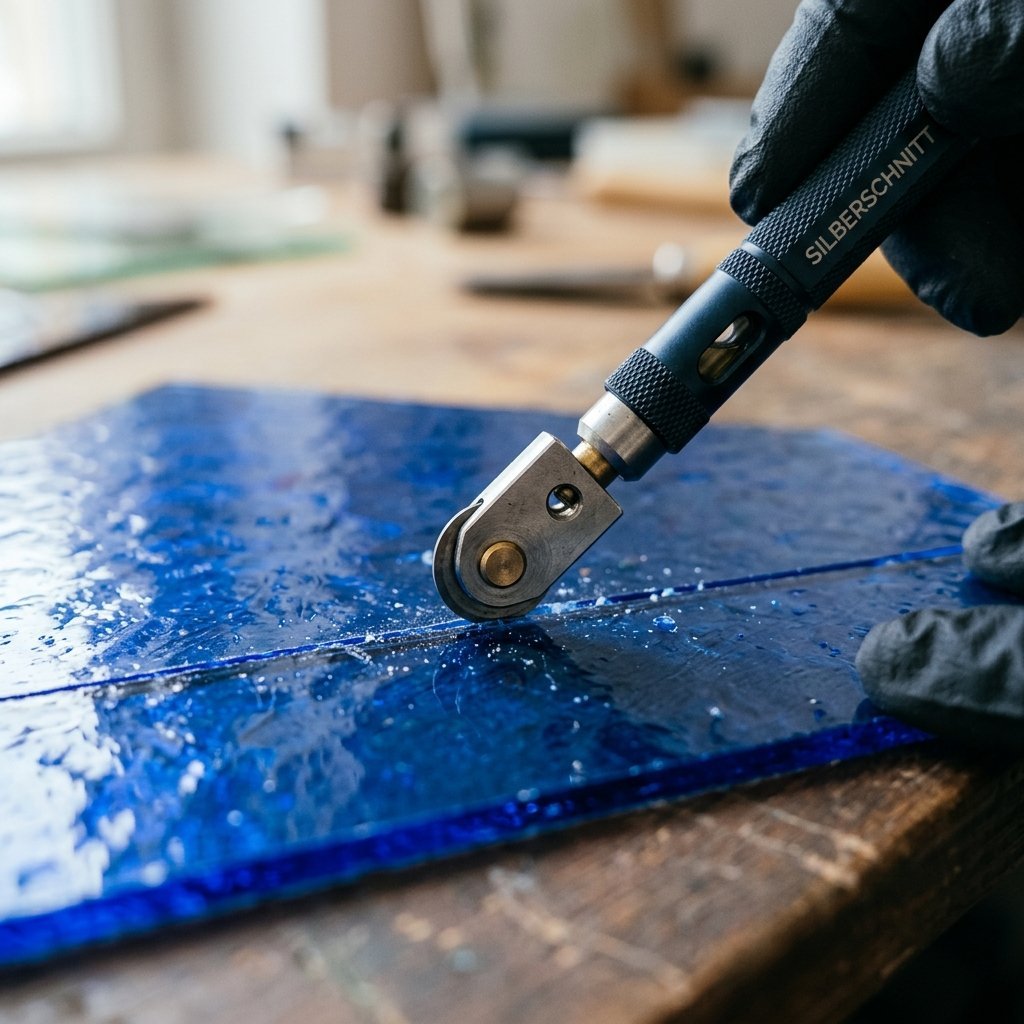
One of the most frequently asked questions by beginner glass crafters is: Should I use an oil-feed glass cutter or a traditional dry cutter? In this guide, we break down the performance, score quality, and lifespan of both styles.
What is an Oil-Feed Glass Cutter?
An oil-feed glass cutter features a hollow handle reservoir filled with light cutting fluid or kerosene. As you roll the wheel across the glass, fluid automatically flows directly onto the scoring wheel axle.
Benefits of Oil-Feed Cutters:
- Smoother Wheel Rotation: Lubrication reduces friction, preventing micro-flaking on cathedral or textured glass.
- Easier Breakage: Oil seeps into the score line, keeping the fissure open slightly longer for clean snaps.
- Extended Tool Lifespan: Prevents premature dulling of carbide cutting wheels.
When to Use Dry Glass Cutters
Dry glass cutters are simple, low-cost tools often used for quick straight cuts on standard window glass or mirror sheets. However, for stained glass art, dry scoring can produce rougher edges and requires manual dipping in oil.
The Verdict
For stained glass artists working with expensive art glass sheets, oil-feed cutters are overwhelmingly recommended by professionals.
Explore our premium EF Art Glass Cutters & Accessories to elevate your studio workflow today.